Creating a north star
Post Series C, leadership at Procurify was under pressure to evolve the product. Our analytics services hadn't been touched in years — and nobody knew what to build or where to start.
When asked what I could dream up, I took it a step further and built a blue-sky design vision. It wove a story compelling enough to excite stakeholders and build hope for the future of Procurify analytics.
The story that landed
At the end of 3 weeks, I ran a 15-minute presentation to product leadership that got them genuinely excited about what Procurify's analytics could become. They walked away with:
A story to tell — one they took directly to stakeholders and investors to build excitement around the future of Procurify analytics.
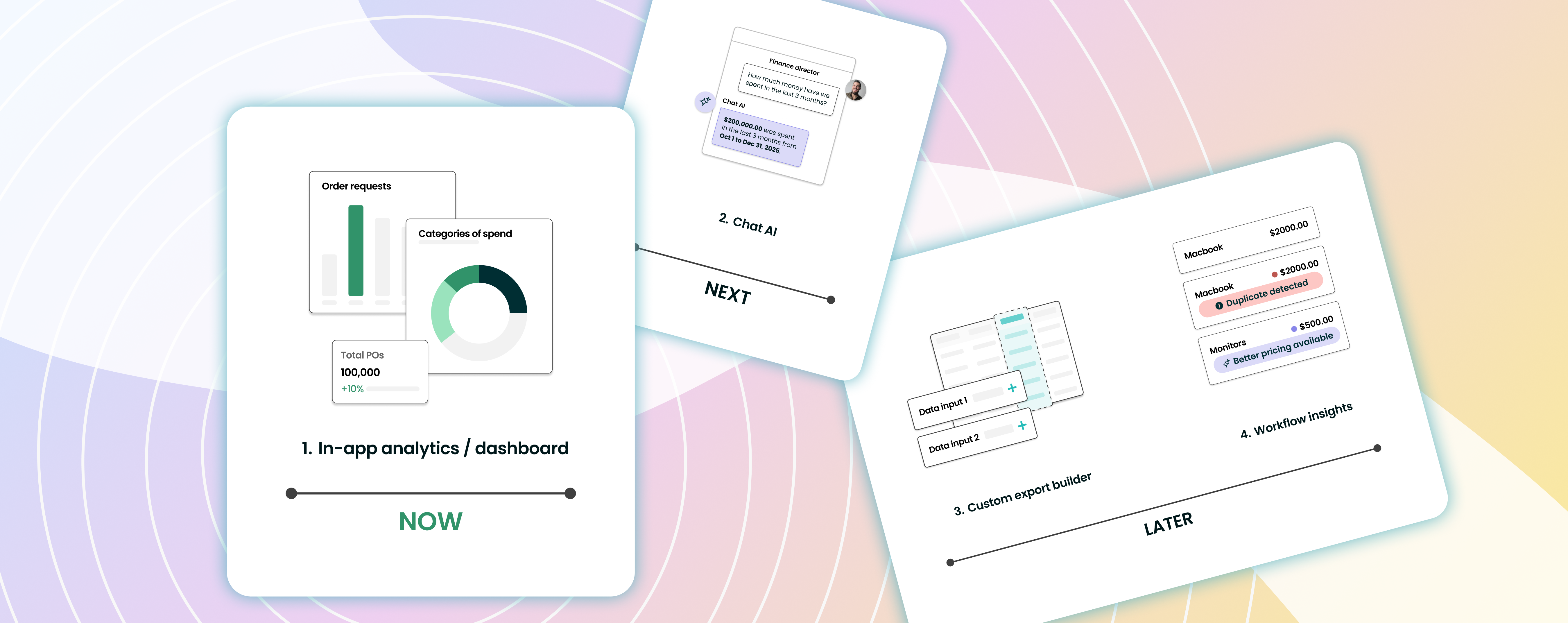
Realistic things to build now — quick wins that could ship and signal momentum immediately.
A long-term roadmap that bridged design ambition with engineering reality — sequenced milestones that kept the vision alive without outpacing what the team could actually build.
Curious about the presentation? Watch it yourself.
Before I could build a story to tell
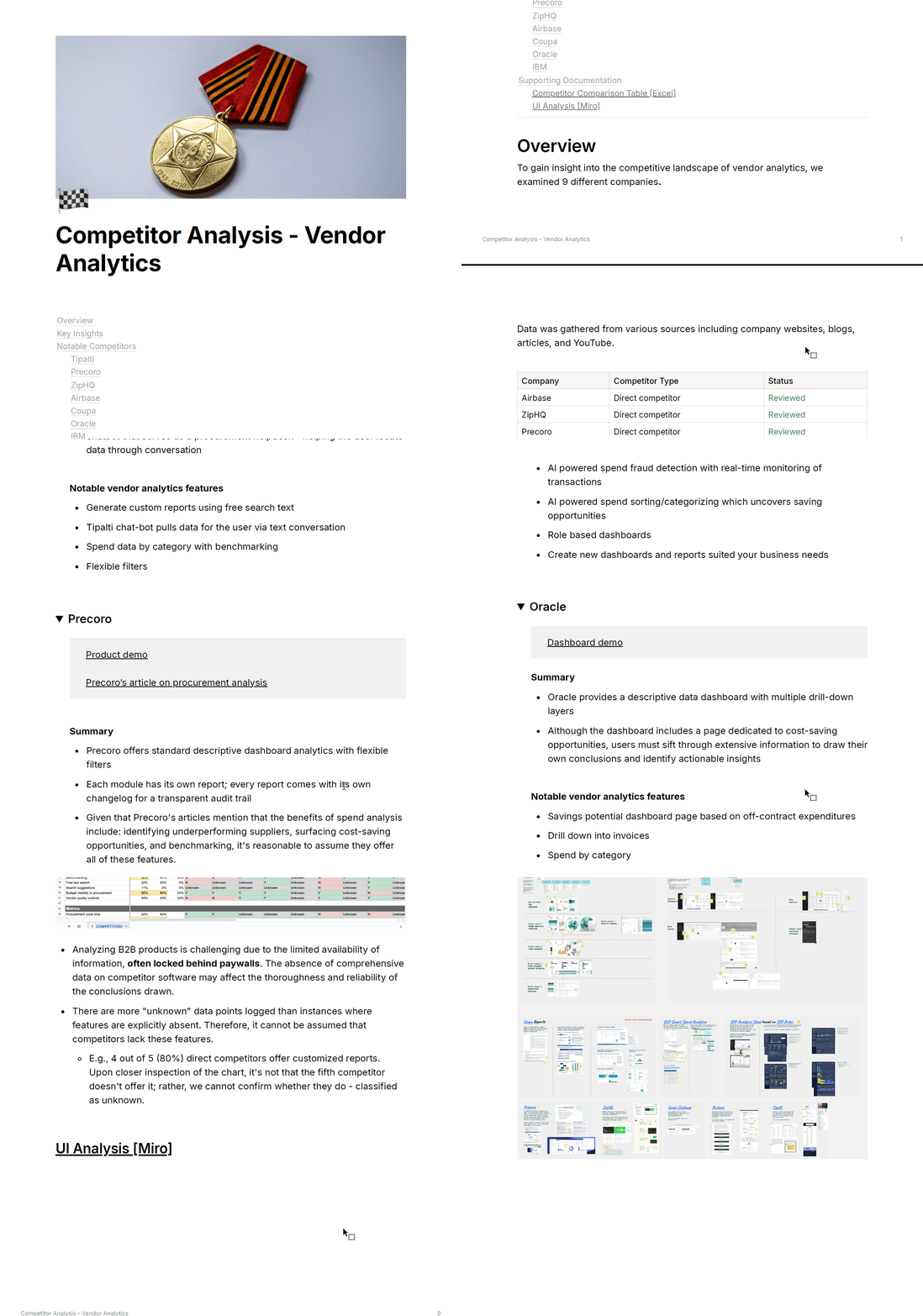
Before I could build a story worth telling, I needed to understand the real landscape. What's currently going on with analytics in Procurify? What's possible? And how can we balance business ideas and user experience?
That meant identifying three things:
- Analytics was hidden in the nav bar, not on the homepage — users had to hunt for data
- Top-level dashboards had no drilldowns and data wasn't real-time, making it hard to trust
- No forecasting tools, customizable exports, role-based viewing, or way to compare spend over time
- Most users hit a wall and went back to spreadsheets
- Market was moving towards AI — competitors were offering intelligent, AI-assisted analytics
- Their reports were customizable with plenty of drilldowns
- Data could be easily exported in flexible formats
- Users (financial analysts, purchasing professionals, general managers, administration)
- Leadership & investors & PM
- Engineering
Where it all connects
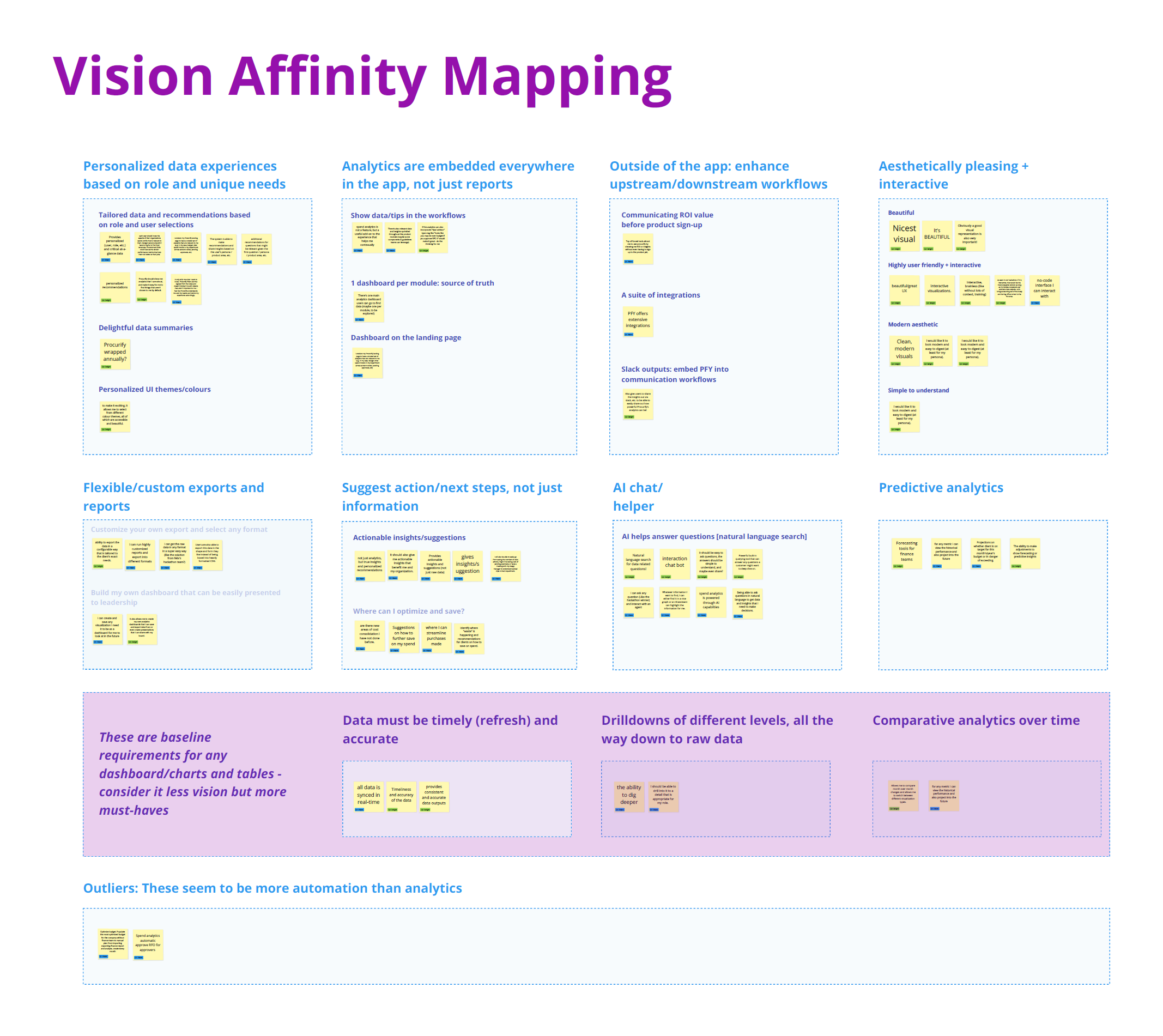
Working alongside PM and engineering, I mapped what each group of stakeholders actually needed — and found the overlap that would drive the vision. The cross-functional alignment here was key: pressure-testing the vision with PM and engineering early meant the story was grounded before it ever hit the room.
- Users — Interactive dashboards front and center. Data they can click into: budgets, spend, vendors, financials. Analytics that feel built for their role, not generic.
- Leadership — AI. Competitiveness. Something marketable that shows Procurify is moving with the industry — not catching up to it.
- Engineering & PM — Full customization wasn't feasible yet, but an AI bot was already in the pipeline. Rather than treating that as a limitation, it became the foundation of the near-term story. Constraints, used right, make a vision more credible — not less exciting.
Making the problem human
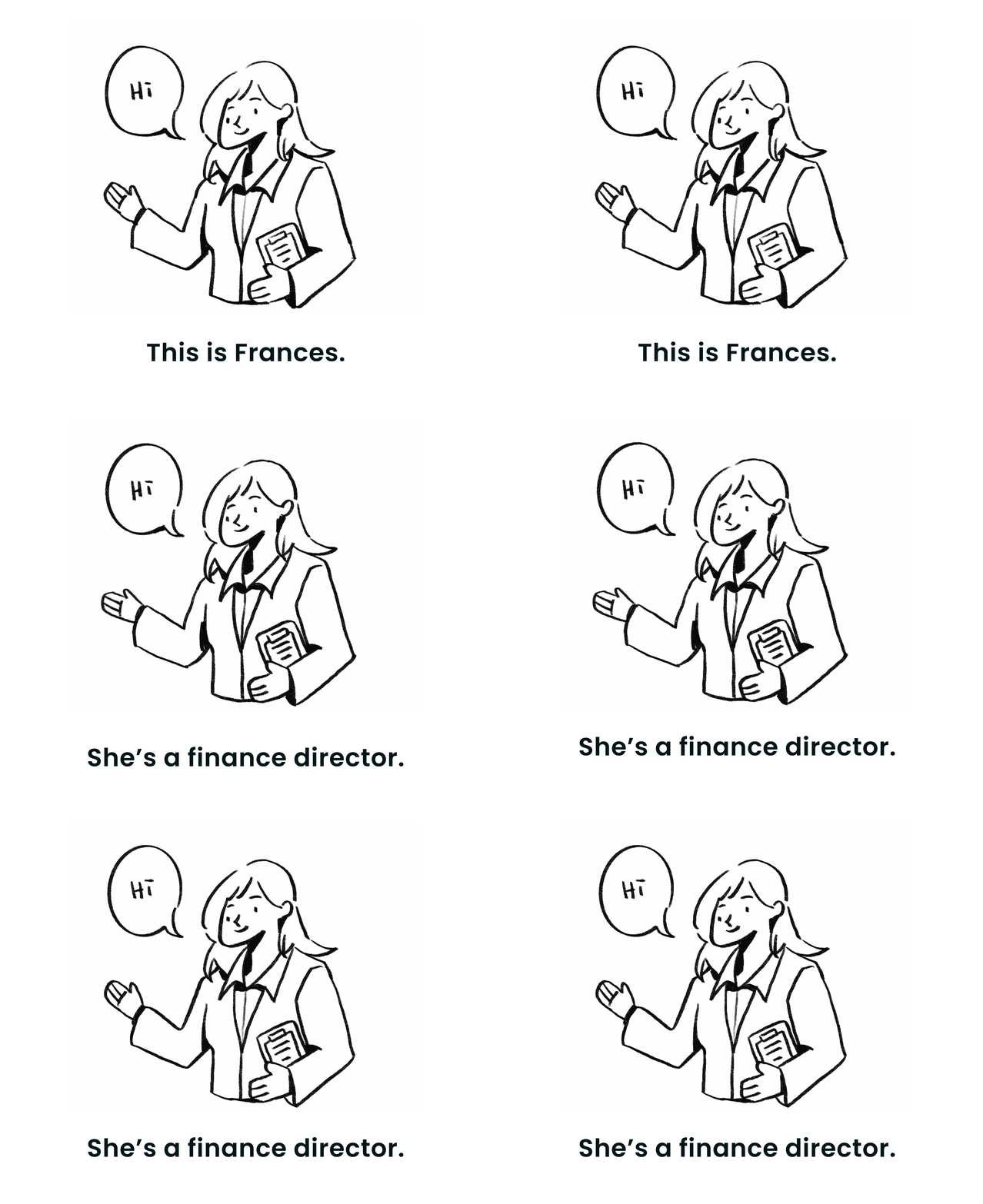
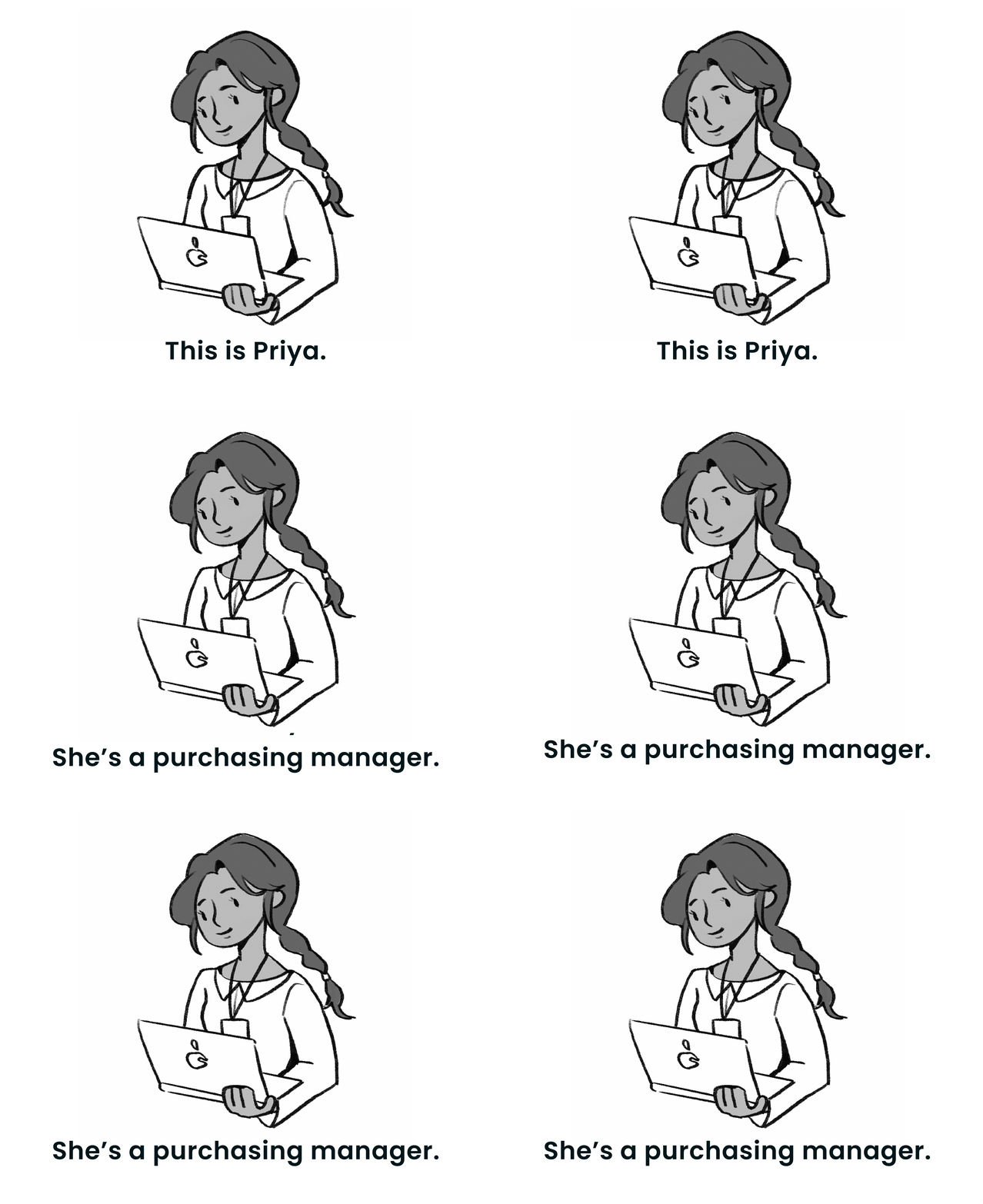
I anchored the vision around two types of users and how they'd engage with the product in their day-to-day. For leadership, seeing the product through a specific person's eyes makes them feel closer to the problem. It turns a roadmap into something with bigger impact and purpose.
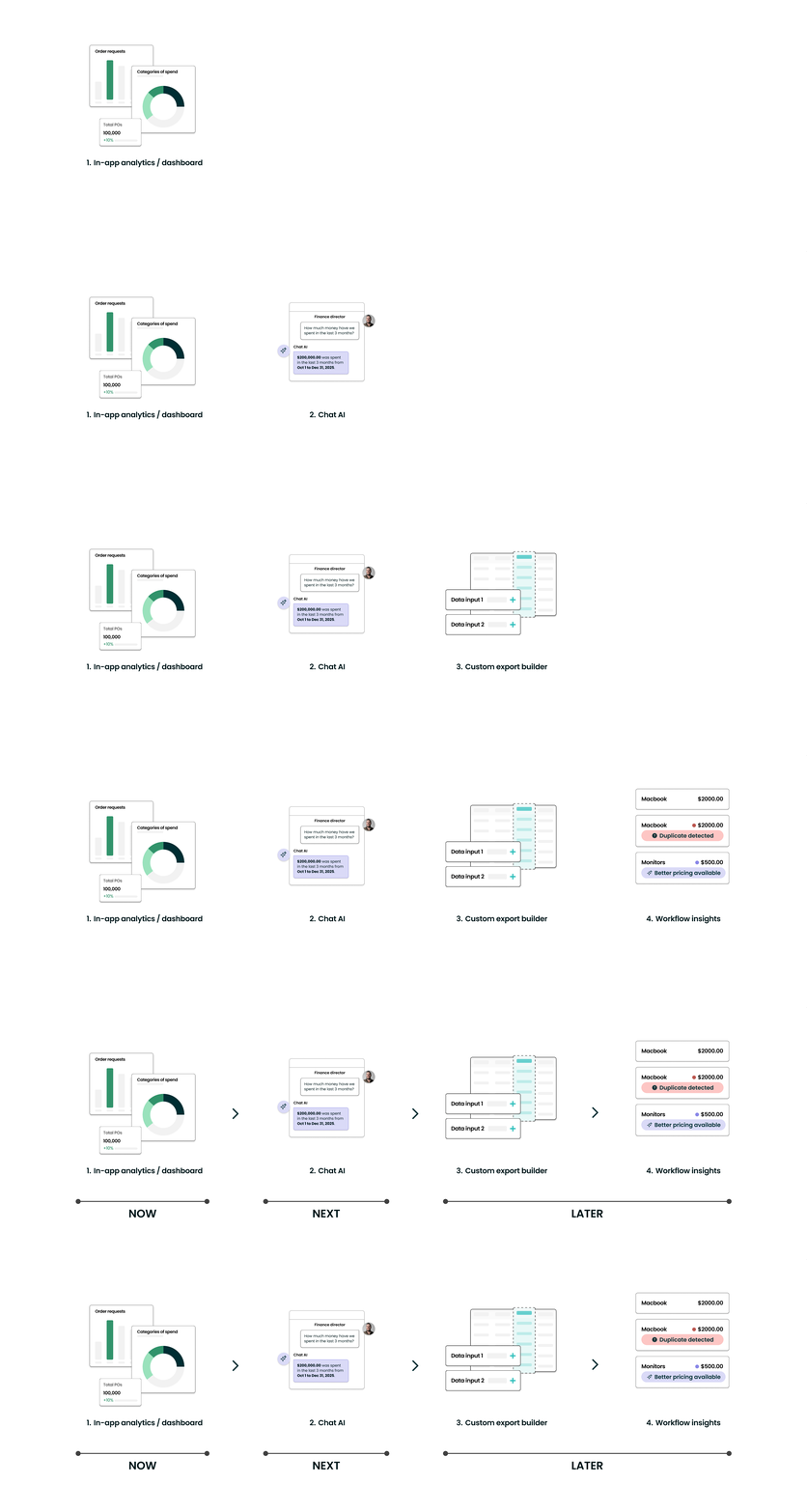
From there, I layered in engineering and design expertise to give the excitement a backbone. The sequencing was deliberate — not just a list of features, but a prioritised roadmap that gave every stakeholder group something to hold onto.
- Leadership got the AI story
- Engineering got a buildable near-term
- Users got a vision that started with trust
Design makes the invisible possible
What this project reinforced is that design plays a critical role in making the invisible possible — creating a visual hook that starts the conversation, builds belief, and gives everyone something concrete to rally around.
Two learnings really stuck with me:
- On strategy — Strategy requires catering first to investors and leadership — then baking in what users need within that. Get the business excited, and you create the conditions to do right by users.
- On selling a vision — To sell a vision, it needs tidbits every stakeholder group can cling onto. One story, multiple entry points. That's the design challenge — and it's as much strategy as it is craft.
Before you can build the right thing, someone has to make the case that it's worth building at all. That's a strategy problem, not a design problem — but design is often the best tool to solve it.
That's the end of this case study, I appreciate your time!